A little bit of history

The very first discovery on the Norwegian continental shelf was made in 1966 by Esso Exploration Norway Inc. Well 25/11-1 found small amounts oil in Lower Tertiary sandstones on the Utsira High. This was the second well offshore Norway.
Later, following 2D and 3D seismic, several appraisal wells, and a huge number of geological and geophysical studies, it turned out that 25/11-1 actually was the Balder discovery well. We now know that Balder is a major oil field with original reserves of several hundred million barrels. Due to its complex geology, however, it was not developed until the 1990’s. Production started in 1999. Ten years ago.
In 1969, three years after the Balder discovery well, Phillips Petroleum spudded well 2/4-1AX (later renamed 2/4-2) in the Central Graben. In the early morning of October 25 oil was hit at 3033 m, and a pay section of 204 m was proved in Tertiary and Upper Cretaceous chalk.
It was immediately realised that something big had been found. The oil column turned out to exceed 300 m, and the structure was huge. When the electric logs were analysed, it also became apparent that the porosity of the chalk was exceptionally high, close to 50%, and that the oil saturation was almost 100%.
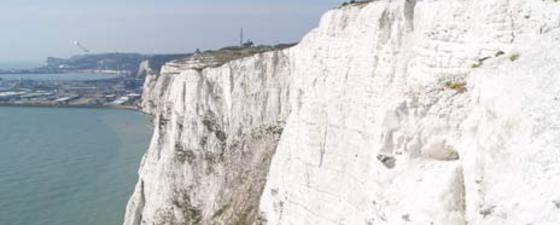
40 years later, the giant Ekofisk (3.3 billion barrels recoverable oil) is still producing, and it may very well produce for another 40 years, or even more. It was the first oil field to be put on stream in the North Sea, and it may well be the last to be shut down. Its success lies in a low permeability non-conventional reservoir that consists of microscopic (clay size) coccolith plates.
It took another six years before Amoco discovered the Valhall field in the neighbouring block 2/8 with well 2/8-5. This is also a giant field reservoired in high porosity, low permeability chalk. Recoverable reserves are estimated to be 1 billion barrels.
The story behind the Valhall field is also extraordinary. First, because it took so many years to find it (see History of oil), and then how 4D seismic acquired twice a year is now being used to maximize its reserves (see Recent advances in Technology).
Enjoy your magazine!